

Screenshot 2026-08-31 at 4.20.28 PM

The Complete Guide to Experiential Learning

A complete guide to experiential learning covering theory, Kolb's four-stage
cycle, examples, benefits, and best practices for higher education. 


What Is Experiential Learning?

Experiential learning is an approach to education in which learners construct knowledge through direct experience and deliberate reflection. The key point that many definitions miss is that experience alone is not enough. An experience becomes learning only when the learner reflects on what happened, draws conclusions, and applies them. A student who finishes an internship but never processes what they did has had an experience, not necessarily a learning experience.

This distinguishes experiential learning from traditional, lecture-based instruction. Traditional learning moves from theory to practice, if it reaches practice at all. Experiential learning starts with the experience and builds the theory out of it. Both have their place, but experiential methods tend to produce stronger engagement, deeper retention, and better transfer of skills into real situations.

The term overlaps with several related ideas, including experiential education, work-integrated learning, work-based learning, and learning by doing. They are not perfectly interchangeable, but they share the same core conviction that people learn best when they are actively engaged in meaningful, real-world tasks.


Experiential Learning Theory and Its Origins

Experiential learning theory did not begin with one person. Its foundations were laid by several influential thinkers in education and psychology.


1-Sep-02-2026-03-36-39-4047-PM

John Dewey

writing in the early twentieth century, argued that education should connect to real life and that we grow through the continuous reconstruction of experience and that poor experiences can cause disengagement.

2-Sep-02-2026-03-36-39-4943-PM

Kurt Lewin
 
contributed the idea of action and feedback loops, drawn from his work on group dynamics.

3-Sep-02-2026-03-36-39-4982-PM

Jean Piaget
 added the constructivist view that learners actively build understanding by interacting with their environment.

4-Sep-02-2026-03-36-39-4404-PM

Carl Rogers
 
emphasized that meaningful learning is self-initiated and personally relevant.

Kolb's Experiential Learning Cycle

David Kolb synthesized the above ideas in 1984 into the model most people know today, which is why his name is now closely tied to experiential learning theory. He described learning as a four-stage cycle that repeats as the learner grows. Each stage feeds the next, and skipping a stage leaves the learning shallow. 🔄

  1. Concrete Experience. The learner does something or has a direct experience.
  2. Reflective Observation. The learner steps back and reviews what happened and why.
  3. Abstract Conceptualization. The learner draws conclusions, forms principles, and connects the experience to broader ideas or theory.
  4. Active Experimentation. The learner plans and tries out what they concluded, which creates a new concrete experience and turns the cycle again.

The strength of Kolb's model is its insistence on all four stages. 🔢 Doing without reflecting, or reflecting without applying, breaks the cycle and limits the learning.

More about Kolb's model (podcast style)

Kolb also proposed four learning styles, labeled Diverging, Assimilating, Converging, and Accommodating, based on how individuals prefer to take in and process experience. This part of his work is the most debated. The broader claim that matching instruction to a person's preferred learning style improves outcomes is not well supported by evidence, so the styles are best treated as a loose descriptive tool rather than a rule for designing instruction. 🛠️


Types of Experiential Learning*

*In the UK and Australia, many of these formats below are grouped under the term work-integrated learning, or WIL, which has become a national focus tied to graduate employability.

Internships and cooperative education (co-ops)

These place students in real jobs, sometimes alternating with academic terms.

Apprentice-ships

These typically combine paid work with structured training, oftentimes under a mentor or manager who can further the teaching experience.

Clinical placements and practica

These are essential in fields like nursing, medicine, education, and social work.

Service-learning

This type of learning integrates meaningful community service with academic instruction and reflection, making it distinct from ordinary volunteering.

Project-based and problem-based learning

This kind of learning is where students tackle authentic problems, often in teams.

Simulations and role-play

These immersive learning situations are valuable when the real experience would be too costly, rare, or risky to practice on demand.

Study abroad and field schools

These memorable experiences use immersion to shift perspective and promote deep understanding.

Capstone projects

Projects such as these ask students to apply everything they have learned in a culminating challenge.

Trusted and Championed by Universities for Years

Outcome stays proving ROI while reducing administrative burden by up to 40%. But don't just take our word for it...

Bryant University

Building infrastructure for Experiential Learning with Outcome from zero to scale


Read Bryant's story ->

Michigan State University

MSU Launches My Spartan Story & a SpartanExperience Record to Support Career Readiness for 40,000+ Students


Read Michigan State's story ->


University of Lethbridge

The experiential transcript is not a nice-to-have, it's the connective tissue holding together an entire institutional strategy.


Read Lethbridge's story ->


Take a quick quiz to watch a webinar that's actually worth your time, featuring institutions that have built, scaled, and thrived with EL. ⤵️

Experiential Learning Examples

To make the types concrete, here are examples of experiential learning in practice. In each case, the pattern is the same. The learner does authentic work, reflects on it, and carries forward what they learned. 🎓

The marketing student 💻

A marketing student runs a live campaign for a local nonprofit and then analyzes what drove the results.

marketingstudent2

The nursing student 🩺

A nursing student completes a clinical rotation and reflects on a difficult patient interaction with a mentor.

nursingstudent


The engineering team 🧪

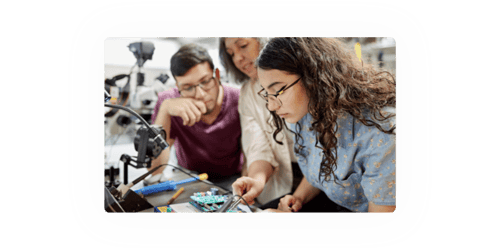
An engineering team builds a working prototype for a real client during a capstone course.
engineeringteam

The business class 💼

A business class competes in a startup pitch competition and debriefs on the judges' feedback.

businessstudents

The group project 👥

A group of students designs and delivers a community project, then writes structured reflections on what they learned about themselves and the community.

capstone


Benefits of Experiential Learning

The benefits of experiential learning are well documented, especially for engagement and skill development. Key benefits include:

  • Deeper retention of knowledge, because active application strengthens memory more than passive review.
  • Better transfer of skills into real settings, since knowledge learned in a realistic context is easier to apply in similar contexts.
  • Stronger durable skills, including communication, teamwork, problem-solving, and adaptability, which are exactly the skills employers ask for.
  • Greater self-efficacy and confidence, as learners see themselves succeed at real tasks.
  • Improved career readiness, which is why many institutions map experiential outcomes to career readiness competencies.
  • Higher engagement and motivation, since meaningful work tends to feel more relevant than abstract lectures.

These outcomes are a major reason experiential learning has become a point of differentiation that institutions actively promote to students and families.


Want a tour of the best EL software?Blog Images (bigger)


Learn from Your Peers: Compliance Webinar Series

Join our peer-led, topic-specific webinar series focused on:

  • Gender-based violence response
  • Academic integrity
  • Complaints and misconduct
  • Governance, reporting, and audit readiness

Hear directly from institutions already live with Advocate, sharing real operational models—not theory.

  • Register for the webinar series
  • Explore Advocate case studies
  • Understand the compliance moment

After your interactive demo, explore more resources:

QUIZ

Benchmark Your Experiential Learning (ExL) Maturity

EBOOK

Experiential Learning Guidebook

PODCAST

Minset In Motion

CASE STUDY

How MSU Launched a Spartan Experience Record  for 40,000+ Students

Experiential Learning in Higher Education

Colleges and universities have made experiential learning central to how they prepare students for careers. Formats like internships, co-ops, service-learning, undergraduate research, and study abroad give students the applied, resume-building experiences that employers increasingly expect. 📃

Review skills-based resumes with AI

Many institutions now treat these experiences as a core part of the student journey and track them as measurable outcomes tied to employability and graduate success.

whitearrow

This focus also raises an equity question that responsible programs address directly. Unpaid internships and unfunded placements can favor students who can afford to work for free, which risks widening the very gaps that experiential learning aims to close.

Paid opportunities, remote and virtual options, funded fellowships, and shorter micro-internships are common responses that widen access. 👏

How to Design Effective Experiential Learning

Quality varies enormously between a well-designed placement and one where a student is left with busywork. Strong experiential learning shares a consistent set of design principles. 

  • Intentionality. Both learner and educator are clear about what the experience should teach, ideally written into learning objectives before it begins.
  • Authenticity. The task is genuine work with real stakes, not a contrived exercise.
  • Appropriate challenge. The experience stretches the learner without overwhelming them.
  • Support and mentoring. A mentor or supervisor guides the learner, so a hard situation produces the right lessons.
  • Structured reflection. Reflection is built in and scaffolded with prompts and frameworks, not bolted on at the end.
  • Meaningful assessment. The program measures the learning rather than simply certifying attendance.

Because you cannot grade experiential learning with a standard exam, assessment usually relies on reflective journals, portfolios and ePortfolios, competency rubrics, supervisor evaluations, and learning contracts that set goals up front. ✍️ Across all of these, structured reflection is the mechanism that turns raw experience into transferable understanding.

BEYOND THE TRANSCRIPT

Show what a transcript can't

The traditional transcript lists courses, credits, and grades, but says nothing about the internship a student completed or the skills they proved along the way. A Comprehensive Learner Record (CLR) captures the experiential and co-curricular learning a transcript leaves out.

  • Full picture

  • Verified and trusted

  • Career ready

  • Connected data

One record for every achievement

A CLR documents internships, service-learning, competencies, badges, and more in a single verifiable record. It ties each achievement to the skills employers are looking for, and it supplements the transcript rather than replacing it.

Records employers can rely on

Because a CLR is digital and verifiable, employers and other institutions can trust the data. Built on a recognized standard from 1EdTech and recommended by AACRAO, it stays portable rather than locked inside any single system.

Something students can carry and prove

A CLR turns experiential learning into a credential students can share long after the experience ends. It connects their achievements to in-demand skills, strengthening the career readiness case at the heart of experiential learning.

Bring every system into one view

A CLR acts as a hub that pulls learning data from across an institution's platforms and tools into a single record. Instead of achievements scattered between the career office, the LMS, and co-curricular systems, everything a student has learned lives in one credible place.

PHASED, STEP-BY-STEP GUIDES

Roadmap for creating or scaling EL on your campus

These interactive worksheets are designed as practical planning tools for experiential learning teams at any stage of implementation. Each phase-specific worksheet includes checkboxes to track required assets and capacities, helping teams assess their current state and identify gaps. Discover which phase you're in.

workbookimage

Frequently Asked Questions About Experiential Learning

Can't find what you're looking for? Ask us!Explore Our EL Solutions

What is experiential learning?

Experiential learning is a process where people learn by doing something directly and then reflecting on the experience to draw out knowledge and skills. It emphasizes active, hands-on engagement over passive instruction.

What is an example of experiential learning?

Examples include internships, clinical placements, service-learning projects, simulations, undergraduate research, and capstone projects. In each, a learner does authentic work and then reflects on what they learned.

What are the four stages of Kolb's experiential learning cycle?

The four stages are concrete experience, reflective observation, abstract conceptualization, and active experimentation. The learner has an experience, reflects on it, forms conclusions, and then tests those conclusions, which starts the cycle again.

Who created experiential learning theory?

The theory draws on John Dewey, Kurt Lewin, Jean Piaget, and Carl Rogers, and was synthesized into its best-known form by David Kolb in 1984.

What is the difference between experiential learning and traditional learning?

Traditional learning generally moves from theory to practice and relies on passive instruction, while experiential learning starts with direct experience and builds understanding through reflection and application.

What are the benefits of experiential learning?

Benefits include deeper retention, better skill transfer, stronger durable skills like teamwork and problem-solving, greater confidence, and improved career readiness.

Take the Next Step👇

Easily catalog opportunities, guide students through every step, and show leadership the impact—all while getting more done with the resources you have.

logo_digital_outcome_white_large-1000 (1)

Built for higher education. Built for student outcomes. 

Already have Symplicity CSM? Start expanding experiential learning there, too.
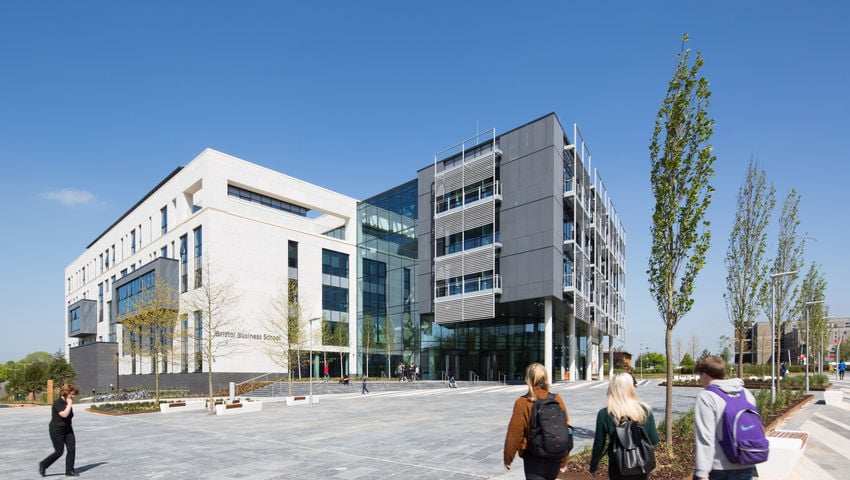
CONFERENCE VENUE

The University of the West of England

Frenchay Campus, Enterprise Park 1 building


LOCATION INFORMATION

Frenchay-exterior-fbl-build-850x480
2020-11-27
RECOMMENDED HOTEL

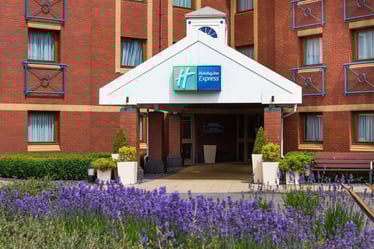
Holiday Inn Express Bristol - Filton

New Road, Bristol, BS34 8TJ United Kingdom

ARRIVAL DRINKS

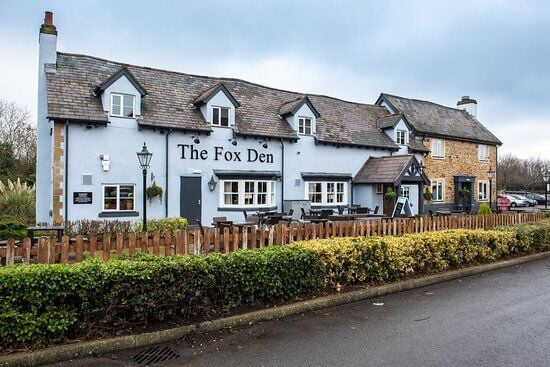
The Fox Den

For those arriving early, we'll be serving welcome drinks across the street from the Holiday Inn Express Bristol - Filton:

      • Monday, June 17th
      • 6:30-9pm
      • The Fox Den, New Rd, Stoke Gifford, Bristol BS34 8TJ, United Kingdom
exterior

Presenter Resources & Checklist  

*All items due by December 2nd
 
Registration
All presenters are required to register for the event here.
 
Headshots

Please submit your headshot for use on conference materials here.

Presenter Details


Presentation Template

Client presenters are welcome to use their preferred presentation templates or use the provided event presentation template. To use the provided template, click the image below to to download a copy of the base file and template file. Follow the instructions on the base file to build your presentation. 

2023 ADV Symposium- ppt template
AGENDA

Your marketing team, from the ground up

Your pain? We understand. This is why we do what we do, and can provide you with an experience like no other.

Check out our highlights from the 2023 Symposium!