
When an employer looks at a resume, they're making a bet. They can't see the internship that actually built the skill, the capstone project that never made it past a bullet point, or the leadership role that taught someone how to run a meeting. They're deciding whether to trust the paper.
Are you giving them a reason to?
We surveyed 76 employers who hire university students and recent graduates to find out exactly how they're making that bet in 2026, and where it's already starting to break down.

Is Resume Trust Breaking Down? A Fifth of Employers Say Yes
Most employers still trust what they see. 30.3% report no noticeable gap between how a candidate looks on paper and how they perform once hired.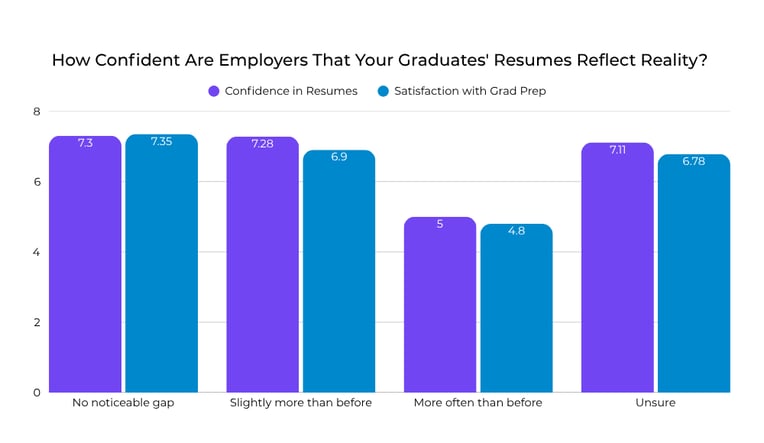
However, 57.9% have noticed some gap this year between resume and reality. For the 19.7% who say it's happening more often than before, the drop is steep: their confidence in resumes falls to 5.0 out of 10, and their satisfaction with how prepared your graduates are falls to 4.8. Compare that to 7.3 and 7.4 among employers who see no gap at all.
That's not a slow erosion of trust. It's a cliff, and it's already happening to one in five of the employers your office depends on.
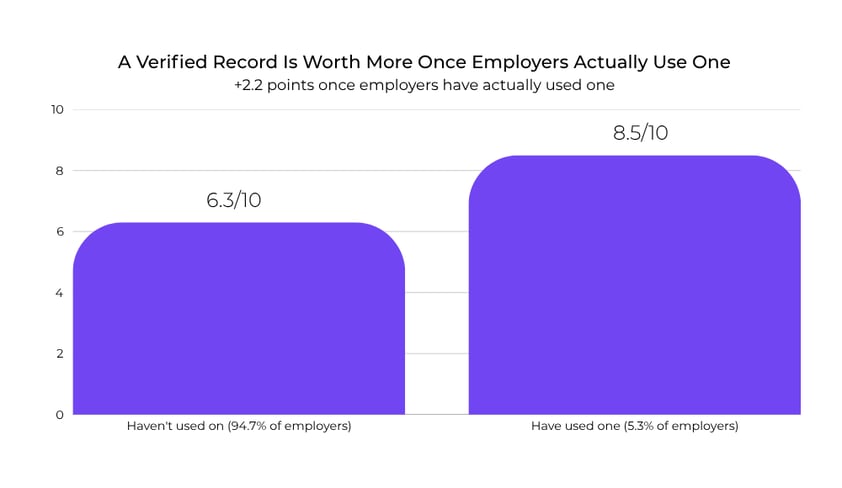
Only 5.3% of employers say they've actually seen or requested a verified Student Experiential Record from a university, but the ones who have rate its added weight in a hiring decision at 8.5 out of 10, well above the 6.3 to 6.4 average among employers who've never encountered one. Employers aren't rejecting verified records. They just haven't been offered one yet.
Take a tour of Outcome's Student Record and Experiential Catalog
What Impact Do Internships Have on Hiring Decisions?
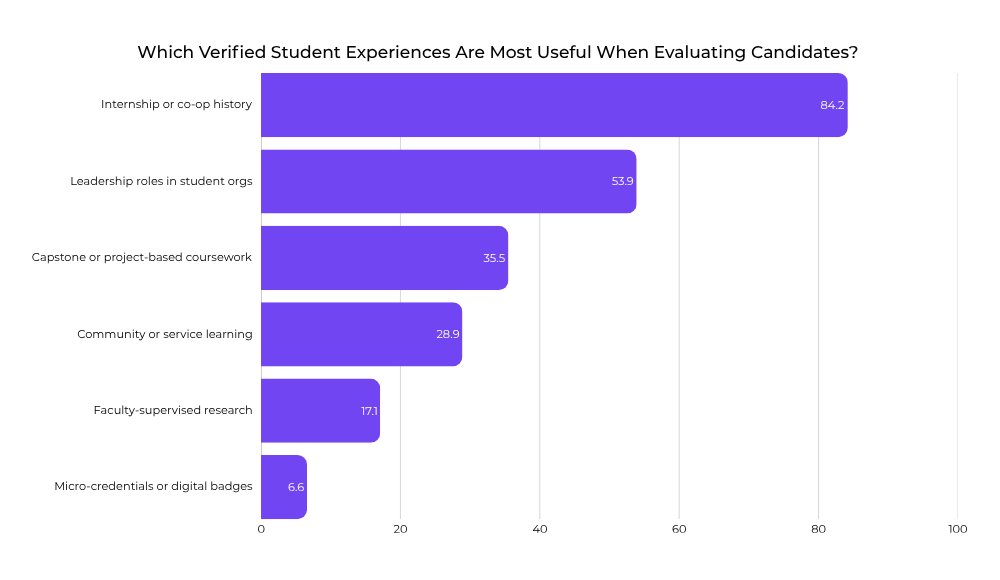
Ask employers what proof of a student's ability matters most, and internship or co-op history wins by a wide margin: 84.2% name it as valuable, more than double the next category, leadership roles in student organizations, at 53.9%. Capstone work (35.5%), community or service learning (28.9%), faculty-supervised research (17.1%), and micro-credentials (6.6%) trail well behind.
That's not a reason to verify internships and stop there. It's the opening. Internships are the credential employers already understand. Once your office proves a verified record built around an internship holds up, the leadership roles, capstones, and research experience sitting next to it stop being invisible resume lines and start being proof employers can actually weigh.
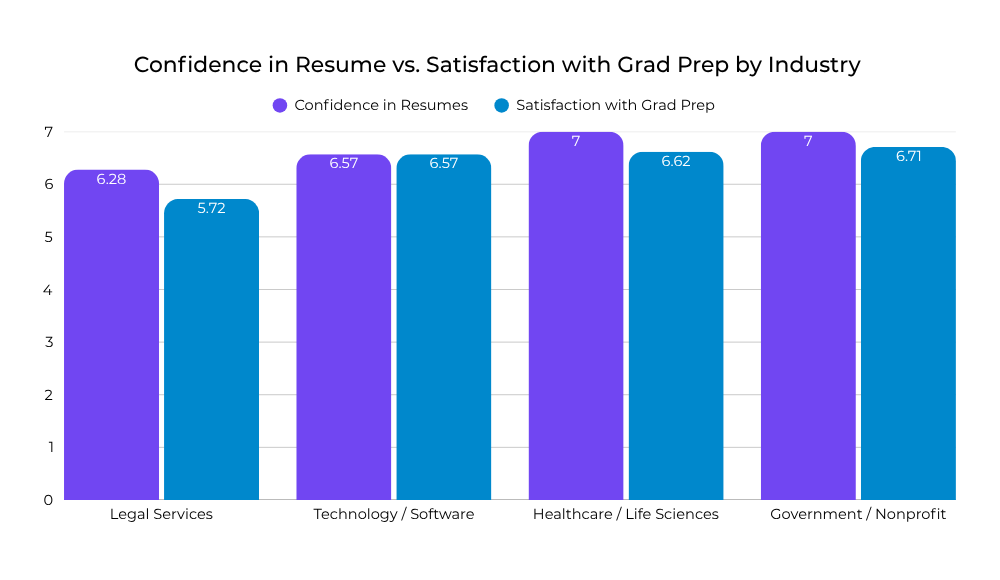
Employers hiring for law school and JD roles rated their confidence in resumes at 6.28 and their satisfaction with graduate preparedness at 5.72. Both numbers trail other sectors by close to a full point. Healthcare, technology, and government or nonprofit employers all reported scores in the 6.6 to 6.7 range.
Legal employers' open-ended comments were also the most direct in the whole dataset, calling out unrealistic expectations and gaps in professional communication. If your office places students into legal employers, address this segment first. Don't assume it's fine because the overall average looks fine.
What are Employers Actually Doing About Workplace AI?
57.9% of employers rate their concern about AI-generated resumes, cover letters, and interview answers at 7 or higher out of 10.
Yet 35.5% say they haven't changed how they evaluate candidates at all. And the employers who have made changes, adding interview rounds, prioritizing live assessments, adding skills tests, aren't meaningfully more concerned than the ones who haven't.
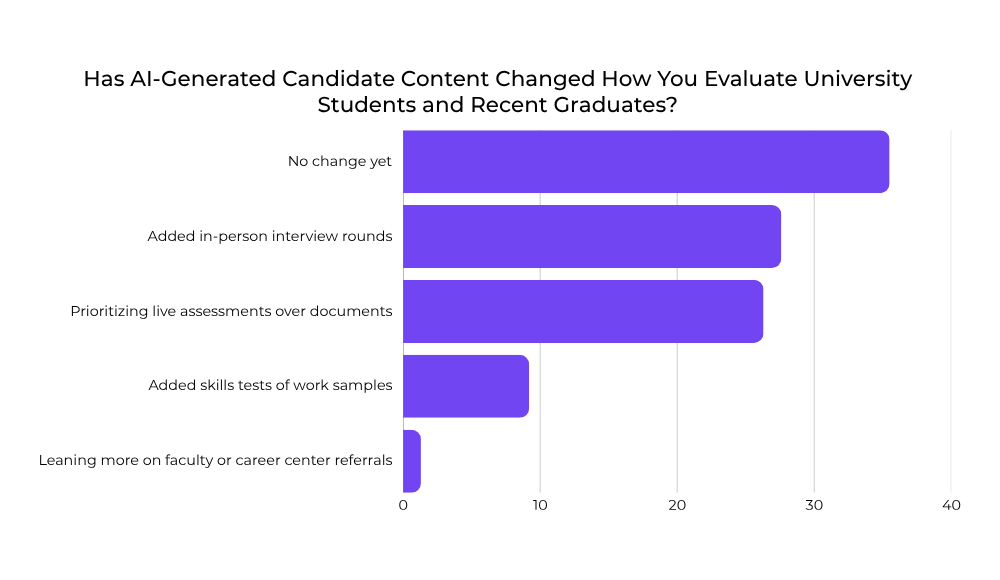
Concern isn't translating into new evaluation practice yet. That's a short window for your office to bring proof to the table before employers build their own workaround.
What the Findings in Employer Hiring Trends Mean for Your Office
- Lead with internships. Whatever experience type you verify first, verify internship and co-op history first. It's the credential employers already trust.
- Close the awareness gap. Most employers have never been offered a verified record. That's an opening, to introduce the concept before they ask for one, and provide them with a tool that actually builds trust.
- Address the gap in expectations. One in five employers sees a growing gap between resumes and real-world skills. Build outreach, verifiable skills, and coaching specifically for the roles and industries where that breakdown shows up most.
- Take industry signal seriously. Legal Services employers were the most vocal about preparedness gaps. Institutions should proactively partner with their employers to co-design skill-focused initiatives.
- Answer AI concerns directly. Employers are worried about AI-generated content, but they haven't found their footing yet. A verified record gives them the answer directly, no extra interview rounds required.
Your office already holds the proof employers say they want. Internship placements, capstone projects, leadership roles, and service hours exist somewhere in your systems today. They're just scattered across advisors, spreadsheets, and platforms that don't talk to each other.
That's where Symplicity Outcome comes in. With Symplicity Outcome, your office can turn every verified experience into one record employers can actually see and weigh.
Why keep asking employers to trust a resume when your office already has the proof to back it up?
Take a tour of Outcome's Student Record and Experiential Catalog
.gif?width=1000&height=580&name=Blog%20Images%20(bigger).gif)


